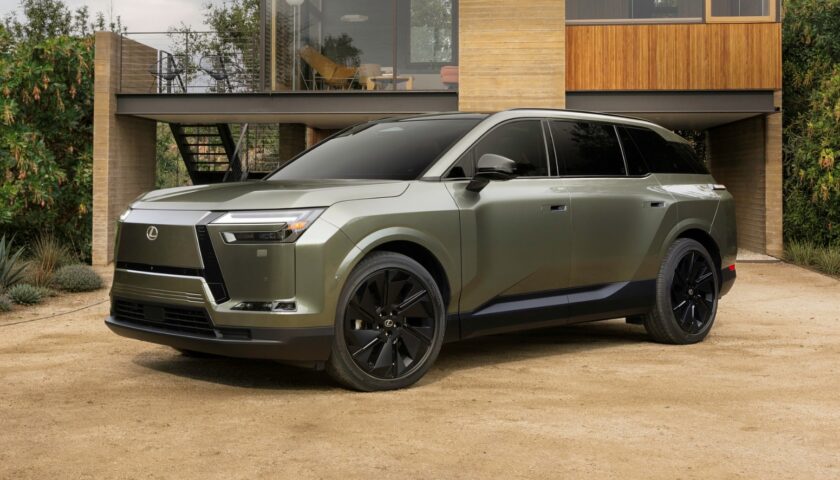
2028 Lexus TZ Dimensions, Price, Redesign – The 2028 Lexus TZ could become an important evolution of Lexus’ all-electric SUV strategy, but there is an important distinction to make from the beginning: the TZ is already an officially announced Lexus model for the 2027 model year. Lexus describes it as its first three-row, all-electric, all-wheel-drive SUV, with sales beginning in the United States in late 2026 and additional versions arriving in early 2027. Therefore, a 2028 TZ should not be described as an entirely hypothetical vehicle. Instead, it is more accurately viewed as the potential second model year of a brand-new electric luxury SUV.
The 2027 TZ establishes a remarkably strong technical foundation. Lexus offers two lithium-ion battery capacities, measuring 76.96 kWh and 95.82 kWh, while every version uses the brand’s DIRECT4 all-wheel-drive system. The standard system produces 308 total system horsepower, while Lexus also offers a dealer-installed Performance Upgrade for the TZ 450e Luxury that raises output to 402 horsepower and cuts the claimed 0-to-60-mph time to 5.2 seconds. Depending on trim and wheels, the manufacturer’s estimated range ratings currently extend from 253 miles to 315 miles.
That gives the 2028 Lexus TZ a fascinating starting point. Rather than needing a radical reinvention, the next model year could concentrate on improving range consistency, charging performance, software, cabin technology, ride comfort, and energy efficiency. Lexus has positioned the TZ around a “Driving Lounge” concept that emphasizes a quiet, spacious cabin while maintaining engaging driving dynamics. The vehicle also uses available Dynamic Rear Steering, which can steer the rear wheels by up to four degrees to improve maneuverability at low speeds and stability at higher speeds.
For buyers watching the future Lexus electric SUV market, the 2028 TZ is particularly significant because it sits at the intersection of luxury, family practicality, and battery-electric technology. The current 2027 model already offers seating for six, a 14-inch touchscreen, Lexus Safety System+ 4.0, panoramic roof technology, DIRECT4 AWD, and premium comfort features. The real opportunity for 2028 would be to refine those strengths rather than change the formula unnecessarily. Since Lexus has not announced a dedicated 2028 specification, pricing, trim changes, or release date, projected details in this article should be understood as forward-looking expectations rather than confirmed Lexus information. 2028 Lexus TZ Dimensions
2028 Lexus TZ Redesign and Update Plan
Exterior & Interior
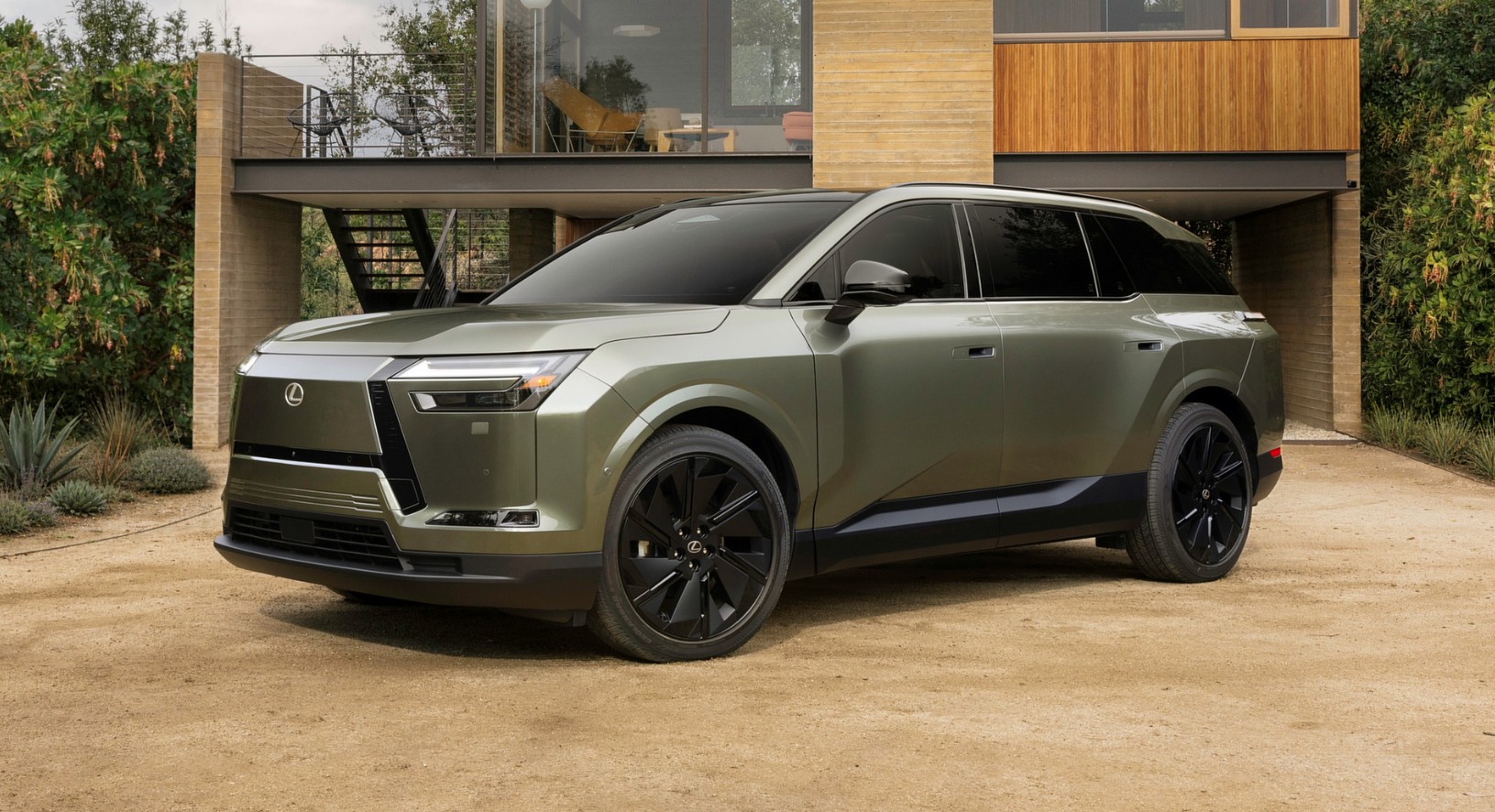
The exterior design of the 2028 Lexus TZ is likely to remain closely related to the 2027 model because the vehicle is entering the market as an entirely new nameplate. Lexus has already developed a distinctive electric SUV shape around aerodynamic efficiency, passenger space, and a modern interpretation of its design language. The body features a clean, sculpted profile rather than relying on traditional grille proportions, while carefully shaped surfaces help manage airflow. For 2028, subtle revisions could include new wheel designs, updated exterior colors, revised lighting signatures, and small aerodynamic improvements rather than a complete styling overhaul.
The TZ’s exterior proportions are especially important because it has to accommodate three rows while maintaining a premium appearance. Lexus has deliberately created a cabin with an open, lounge-like atmosphere, and the panoramic roof extends that sense of spaciousness across all three seating rows. The roof incorporates a wire-driven power sunshade designed to preserve headroom while providing broad visibility. A future model could refine the roof system, improve insulation against heat and road noise, or introduce smarter electrochromic glass technology. Such changes would support the TZ’s luxury positioning without compromising the fundamental shape.
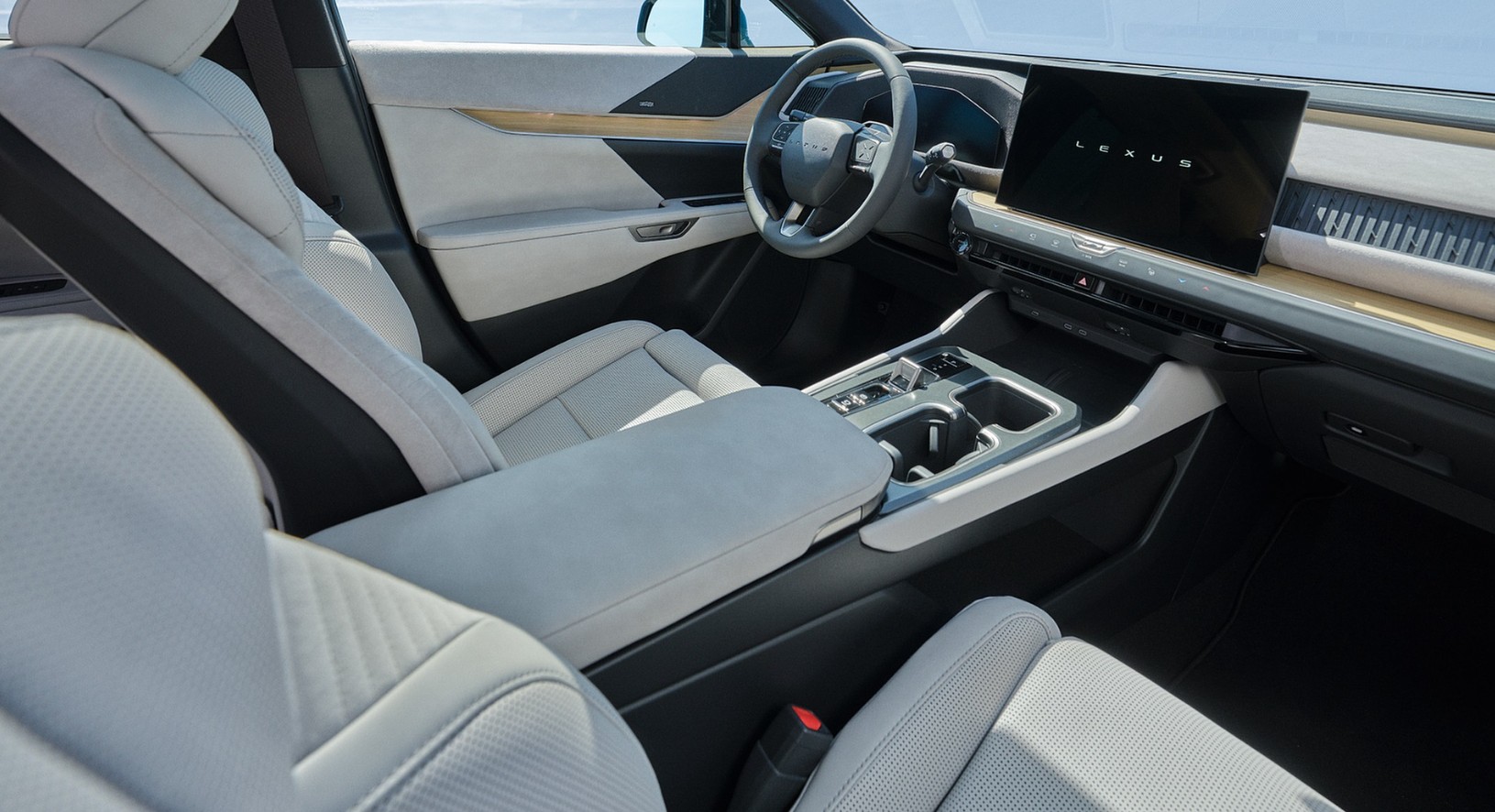
Inside, the 2028 Lexus TZ could receive some of its most meaningful upgrades. The current model already uses a 14-inch Lexus Interface touchscreen and provides wireless Apple CarPlay and Android Auto compatibility. Lexus has also designed the cabin around the “Driving Lounge” philosophy, with an emphasis on quietness and passenger comfort. The front passenger and second-row seats can be equipped with power ottomans, while third-row passengers receive sofa-like cushions. Ambient lighting incorporates six Japanese-inspired themes, reinforcing the brand’s focus on craftsmanship rather than simply filling the cabin with digital displays.
The 2028 model could push this concept further with enhanced materials, improved seat ventilation and massage functions, quieter acoustic glass, faster infotainment hardware, and more intelligent climate control. Lexus could also expand the use of sustainable materials and handcrafted surfaces. The current TZ already offers forged bamboo interior surfaces, highlighting a combination of traditional Japanese-inspired craftsmanship and modern sustainability. More advanced storage solutions could improve family practicality as well. Because the TZ is a six-seat SUV, second-row comfort and third-row accessibility will remain crucial. A premium electric SUV cannot simply provide impressive front seats; every passenger should experience the benefits of the electric platform.
A major redesign is unlikely to be necessary immediately because the TZ is an all-new model for 2027. The more realistic 2028 strategy would be a refinement year, allowing Lexus to address real-world feedback from the first production vehicles. Software calibration could receive particular attention, especially in areas such as regenerative braking, battery temperature management, navigation-based energy prediction, charging-route planning, and driver-assistance behavior. A newly launched EV often has substantial opportunities for improvement through software alone, and Lexus could use over-the-air functionality and dealer updates to enhance the ownership experience without changing the vehicle’s core mechanical architecture.
Battery development would be another logical focus. The existing 95.82-kWh battery already supports a manufacturer-estimated 315-mile range on the Premium Touring grade, while the Luxury grade is estimated at 279 miles. Lexus’ own figures demonstrate how wheels, equipment, and configuration can significantly affect range. For 2028, higher energy density could allow engineers to increase usable capacity without adding substantial mass. An improvement in battery chemistry, thermal management, or usable energy could potentially raise real-world range while also making long-distance driving more predictable. However, there is currently no official indication that Lexus will install a new battery for the 2028 model year.
Charging technology could become an even more important differentiator. The TZ is already designed around modern EV ownership, and Lexus has increasingly emphasized charging accessibility throughout its electric lineup. A future version could potentially offer faster DC charging, improved charging-curve consistency, better preconditioning, and more intelligent battery-temperature preparation before arriving at a fast charger. Those improvements would be particularly valuable for a three-row luxury SUV because buyers are likely to expect long-distance touring capability. A sophisticated charging system could make the TZ feel less like an early-generation electric SUV and more like a mature luxury vehicle designed around electric mobility from the beginning.
Chassis refinement should also remain high on the engineering agenda. Lexus says the TZ’s body structure uses high-rigidity adhesives, laser screw welding, and lightweight aluminum components to balance torsional rigidity, handling stability, and weight reduction. Dynamic Rear Steering can contribute to tighter maneuverability at low speeds and improved stability at highway speeds. For 2028, Lexus could refine steering calibration, adaptive damping, regenerative braking feel, and DIRECT4 torque distribution. The objective would not be to make the TZ aggressively sporty; instead, it should deliver the calm, controlled response expected from a Lexus while retaining enough agility to make a large three-row SUV feel manageable. 2028 Lexus TZ Dimensions
2028 Lexus TZ Specs
Engine & Performance
The current TZ powertrain gives Lexus a solid foundation for the 2028 model year. Every U.S.-market TZ uses dual-motor all-wheel drive through Lexus DIRECT4, with the standard system rated at 308 total system horsepower. The Premium grade uses a 76.96-kWh lithium-ion battery, while Premium Touring and Luxury grades use a larger 95.82-kWh battery. Lexus estimates 253 miles of range for the Premium, 315 miles for the Premium Touring, and 279 miles for the Luxury. These differences show that battery capacity alone does not determine range; wheel size, equipment, calibration, and vehicle configuration also matter.
For drivers wanting more performance, Lexus has already created a path beyond the standard output. A dealer-installed Performance Upgrade for the TZ 450e Luxury increases total system horsepower to 402 and reduces the claimed 0-to-60-mph acceleration time to 5.2 seconds. This approach is particularly interesting because it suggests Lexus can extract substantially more performance from the same basic electric architecture. A future 2028 model could potentially integrate similar performance calibration directly into a factory grade, although there is no official confirmation of such a change. The availability of a performance-oriented upgrade gives Lexus flexibility without requiring a completely separate high-performance TZ model.
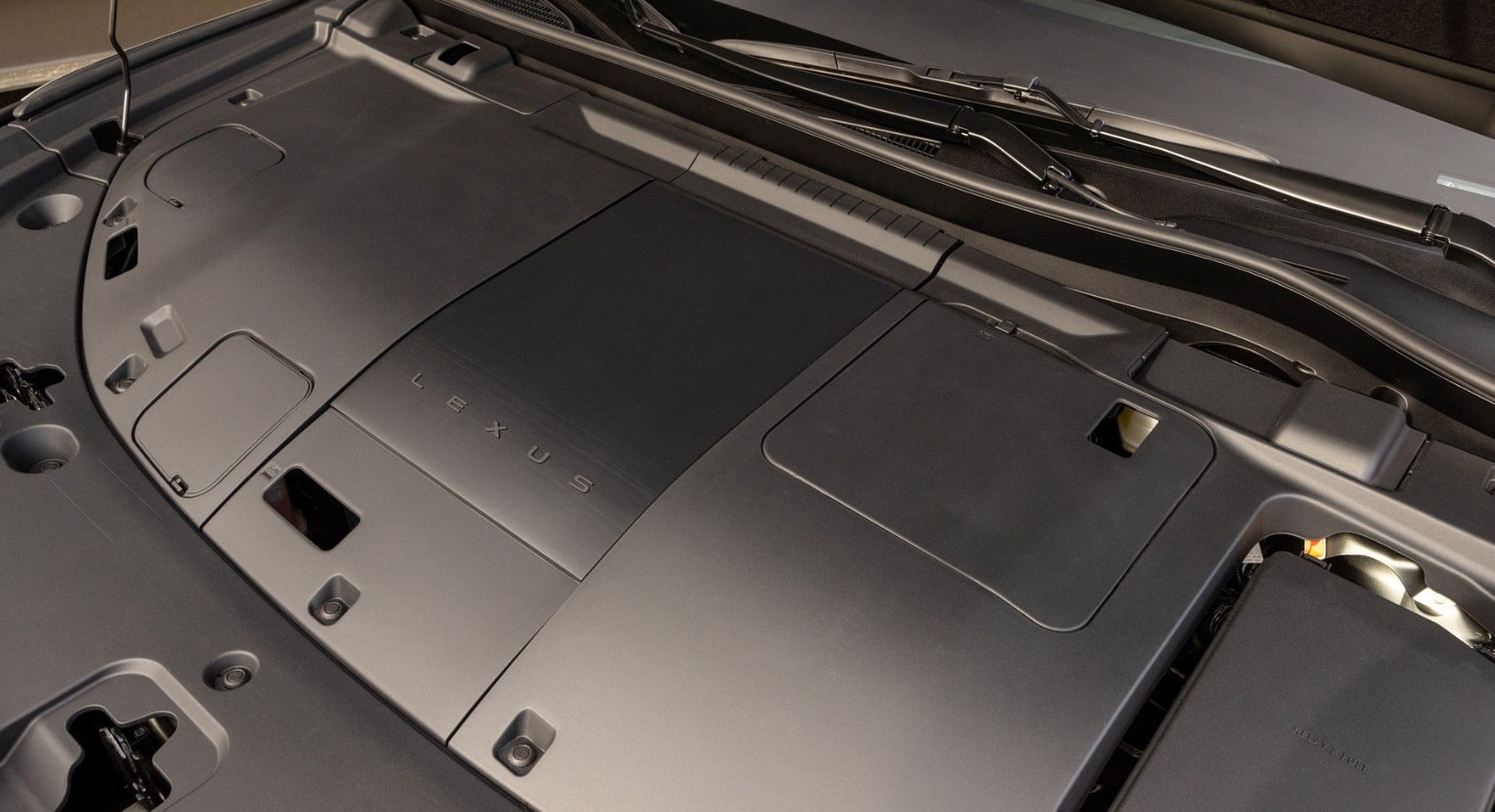
DIRECT4 will remain one of the TZ’s most important performance technologies. Rather than treating all-wheel drive as a simple traction system, Lexus can continuously distribute electric torque between the front and rear axles to influence acceleration, cornering behavior, stability, and efficiency. That ability is especially valuable in a heavy three-row vehicle. A future calibration could make the system more predictive, using steering input, accelerator position, road conditions, and navigation information to anticipate how much torque each axle needs. Such software-driven refinement could improve both handling confidence and energy consumption without adding significant mechanical complexity.
Ride comfort will probably remain more important than outright acceleration. The TZ’s customers are likely to value silent highway cruising, smooth low-speed response, predictable handling, and excellent passenger comfort. Electric propulsion naturally helps in those areas because there is no conventional engine vibration or multi-speed transmission shifting through gears. Lexus can build upon that advantage with refined suspension tuning, low-noise tires, improved acoustic insulation, and carefully controlled regenerative braking. The ideal 2028 TZ would therefore feel quick when needed but relaxed most of the time, preserving the distinctive Lexus approach to luxury rather than trying to imitate a performance crossover.
2028 Lexus TZ Fuel Economy
Fuel economy for the TZ should technically be discussed in terms of electrical efficiency rather than traditional miles per gallon. The 2027 model is a battery-electric SUV, so there is no gasoline fuel-economy rating. Instead, range and energy consumption determine its operating efficiency. The current manufacturer’s estimated range extends as high as 315 miles for the TZ 450e Premium Touring. A 2028 version could potentially improve efficiency through aerodynamic refinements, optimized thermal management, more efficient motors, low-rolling-resistance tires, and software updates. Official 2028 EPA figures cannot be stated until Lexus announces the vehicle and the EPA completes certification.
2028 Lexus TZ Safety Features
Safety technology should remain a major selling point for the 2028 Lexus TZ. The current model comes standard with Lexus Safety System+ 4.0, which includes a broad collection of active safety and driver-assistance technologies. Lexus highlights features including Lane Change Assist, Rear Pedestrian Detection, Front Cross-Traffic Alert, Lane Tracing Assist, and Proactive Driving Assist. The system uses cameras and millimeter-wave radar to monitor the surrounding environment and assist with certain driving tasks. A future model could improve sensor resolution, object recognition, lane-change smoothness, and collision avoidance while making driver-assistance responses feel more natural. 2028 Lexus TZ Dimensions
2028 Lexus TZ Release Date & Price
The 2028 trim structure could largely carry over from the 2027 lineup. Lexus currently offers three grades in the United States: Premium, Premium Touring, and Luxury. The TZ 450e Premium starts at $64,050 including the $1,550 Delivery, Processing and Handling fee, while Premium Touring starts at $72,050 and Luxury at $80,550. Lexus says the Premium is scheduled to become available in late 2026, with Premium Touring and Luxury arriving in early 2027. A future 2028 model could retain these grades while introducing additional equipment or a new appearance package.
Pricing for the 2028 Lexus TZ has not been announced, so the most responsible projection is a modest adjustment from the 2027 structure rather than an invented official MSRP. If Lexus carries the current lineup forward, a future TZ Premium could potentially begin in the mid-$60,000 range, while Premium Touring and Luxury could move into the mid-$70,000 and low-$80,000 territory respectively. The actual price will depend on battery costs, equipment, tariffs, market conditions, and Lexus’ strategy at the time. The release schedule is also unconfirmed, although a conventional 2028 model-year cycle would likely mean U.S. availability beginning sometime during the 2027 calendar year or later. Lexus has not announced a specific 2028 launch date.
Conclusion
The 2028 Lexus TZ is unlikely to need a dramatic reinvention because the TZ itself represents a major new chapter for Lexus. As the brand’s first three-row all-electric SUV, it already combines a dedicated electric architecture, DIRECT4 all-wheel drive, a spacious six-seat cabin, advanced safety technology, and Lexus’ traditional emphasis on quietness and craftsmanship. The more important question for 2028 is how effectively Lexus can refine those ingredients after the first production year.
Battery efficiency, charging performance, software, cabin technology, and ride refinement are the areas most likely to determine the TZ’s long-term competitiveness. A higher-density battery could improve range without increasing weight, while smarter thermal management could make fast charging more consistent. More advanced energy-management software could also help drivers make better use of available range. None of these improvements requires abandoning the TZ’s fundamental identity.
The interior gives Lexus another opportunity to separate the TZ from conventional electric SUVs. Its Driving Lounge concept, panoramic roof, premium materials, power ottomans, and six-seat configuration already establish a strong luxury foundation. Further improvements in acoustics, seating comfort, infotainment responsiveness, and personalized climate control could make the cabin even more attractive to families who spend significant time on the road.
Ultimately, the 2028 Lexus TZ could become one of the most important vehicles in Lexus’ expanding electric lineup. Its combination of three-row practicality, all-wheel-drive performance, long-distance range potential, and high-end comfort gives it a broad role within the brand. The final 2028 specifications remain unconfirmed, but the 2027 TZ shows that Lexus is not treating the three-row electric SUV as a niche experiment. If the company continues improving range, charging, software, and luxury refinement, the TZ could develop into a defining model for Lexus’ next generation of electric mobility.